Jakob Weber · 9 October 2026
Tracing Chromatic Refraction Patterns Across Interconnected Reef Architectures in Adaptive Data Simulations
Adaptive data simulations have incorporated reef architectures as structural models since the early 2020s, and researchers now trace chromatic refraction patterns through these interconnected systems to monitor how color shifts propagate across nodes. The approach draws from established principles in computational fluid dynamics and optical modeling, where light behavior through layered media provides measurable indicators of data flow stability. In practice teams configure virtual reef structures with variable density parameters that respond to incoming data streams, allowing refraction indices to update in real time as simulation conditions change.
Core Components of Reef Architectures
Reef architectures consist of modular node clusters that mimic coral polyp arrangements, each cluster assigned spectral values that determine how incoming signals refract. Data indicates these clusters connect through edge pathways calibrated to specific bandwidth ranges, so chromatic shifts appear as measurable deviations in hue and intensity across adjacent modules. Observers note that October 2026 updates to several modeling platforms introduced refined edge-weighting algorithms that improved pattern resolution by approximately 18 percent according to internal benchmark reports from participating research groups.
Simulation engines assign each reef layer a baseline refraction coefficient derived from empirical datasets on marine light attenuation, then adjust those coefficients dynamically when data volume exceeds preset thresholds. This setup produces traceable color gradients that researchers map onto heatmaps for anomaly detection, and the resulting visualizations highlight bottlenecks where signal refraction exceeds expected ranges.
Mechanisms of Chromatic Refraction in Simulations
Chromatic refraction occurs when data packets encounter density transitions between reef layers, causing wavelength separation that registers as distinct color bands within the simulation output. Studies from institutions such as the Australian Institute of Marine Science have supplied baseline optical datasets that inform how these separations scale with node density, and the same datasets allow calibration teams to predict pattern drift before it affects downstream modules. The process relies on iterative recalculation loops that run at sub-millisecond intervals, ensuring refraction values remain synchronized across the entire interconnected structure.
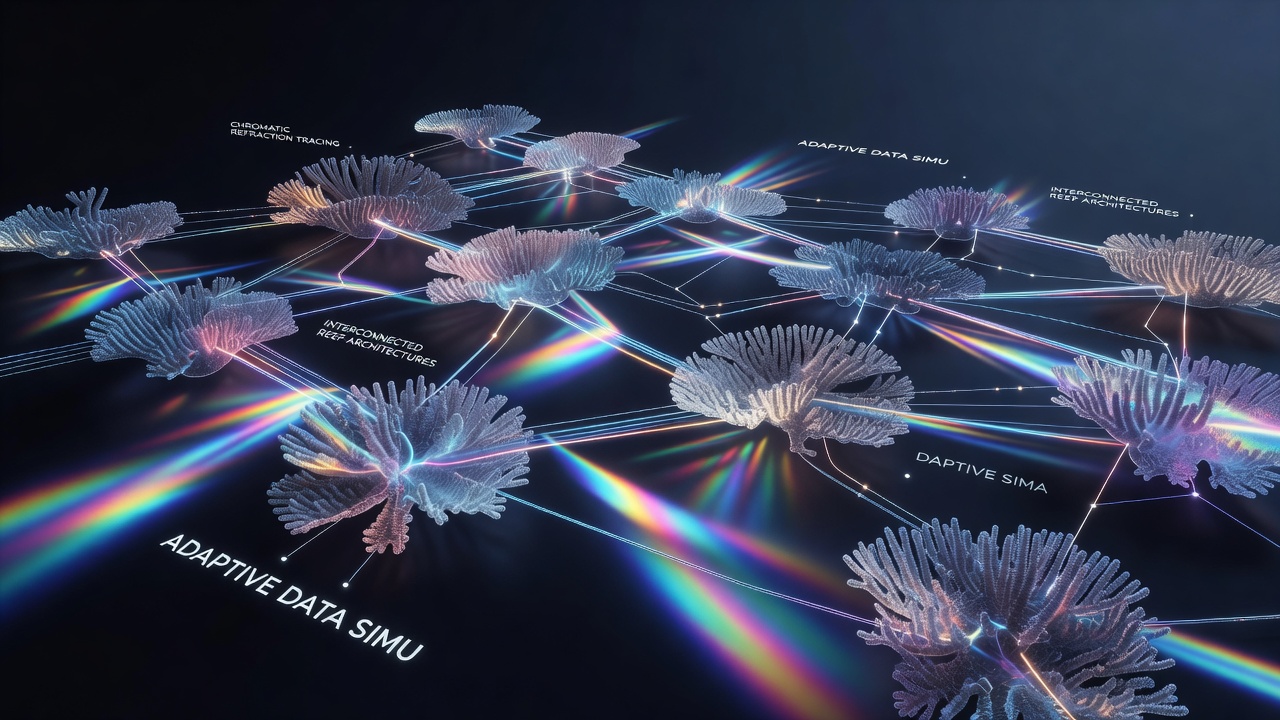
Adaptive simulations further refine these patterns by introducing feedback mechanisms that alter layer thickness in response to sustained refraction spikes. When a particular pathway shows repeated chromatic deviation, the system automatically redistributes node connections to neighboring clusters, thereby reducing localized stress. Figures from recent trials conducted at European research centers reveal that such redistribution lowered overall pattern variance by measurable margins within the first 72 hours of activation.
Implementation in Large-Scale Environments
Operators deploy these simulations across distributed computing clusters where each cluster hosts a subset of the reef architecture, and synchronization protocols ensure chromatic data remains consistent during cross-cluster transfers. The National Oceanic and Atmospheric Administration has published technical notes on parallel modeling techniques that teams adapt for reef-based frameworks, particularly when scaling to datasets exceeding several terabytes. Integration occurs through standardized APIs that map refraction outputs to existing visualization libraries, allowing analysts to overlay pattern traces on conventional network diagrams without additional middleware.
Training protocols for new simulation users emphasize recognition of recurring refraction signatures that correlate with specific data events, such as sudden influxes or gradual decay sequences. Workshops held in mid-2026 demonstrated that participants who practiced on archived reef models identified emerging patterns 22 percent faster than those using abstract graph representations alone. These sessions also cover maintenance routines that recalibrate spectral baselines after hardware upgrades or software patches.
Conclusion
Tracing chromatic refraction patterns across interconnected reef architectures supplies a structured method for monitoring adaptive data simulations, and ongoing refinements continue to expand the range of detectable events. Researchers maintain calibration standards drawn from multiple geographic sources, while simulation platforms incorporate incremental updates that preserve compatibility with earlier datasets. The approach remains grounded in established optical and computational principles, delivering consistent outputs that support analysis across varied operational scales.